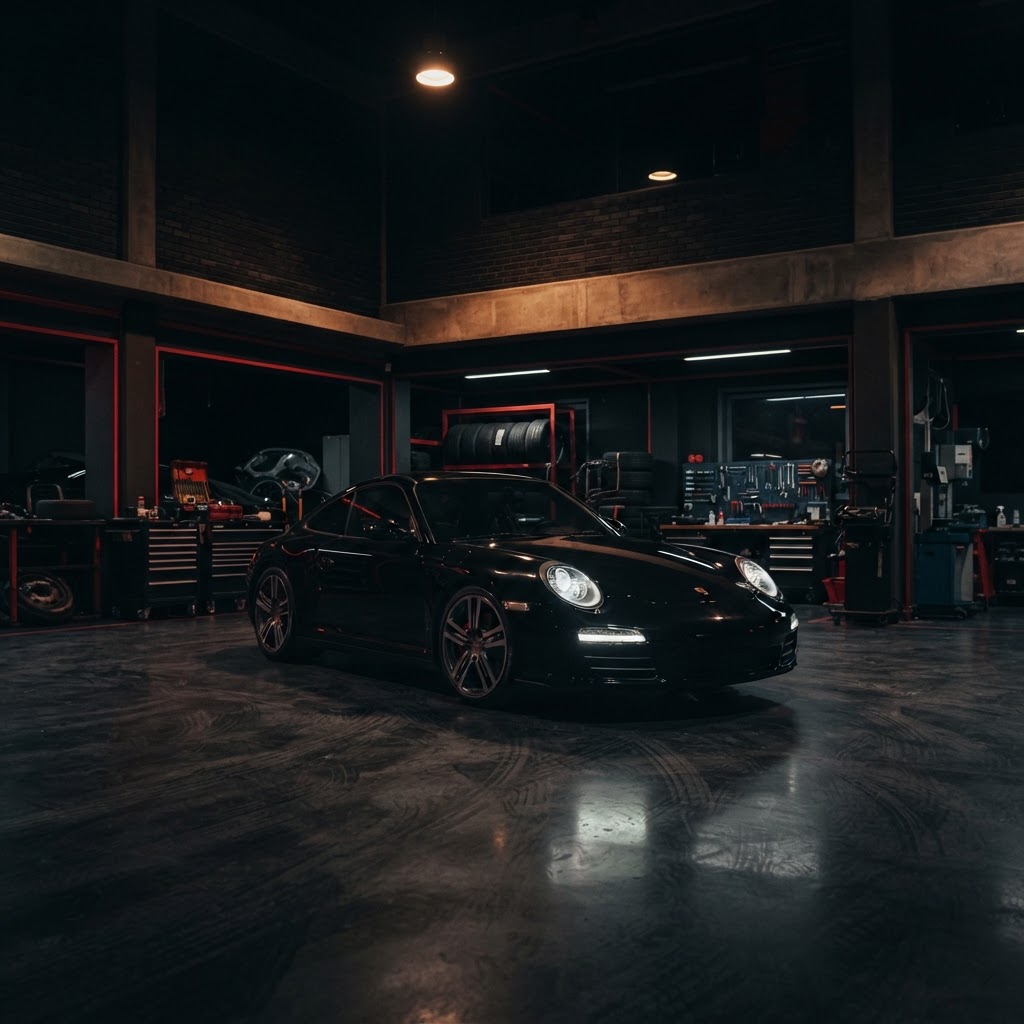
Independent specialist · Al Quoz, Dubai
Porsche 911 997: Service & Care in Dubai
The late 997 is an analogue-feeling 911 with direct-injection engines and optional early PDK. At this age, condition and documented care matter more than mileage alone.
Know your 997
Coverage in this guide: 2010–2012 cars. Years can overlap at generation changes; identify the actual build, engine and market specification rather than relying on the first registration date.
This page covers 2010–2012 997.2 cars. Carrera, Turbo and GT variants use different engines and equipment, so one fault list must not be applied across the range.
Reported concerns and inspection priorities
These are areas to investigate, not faults every example develops. Engine, equipment, age and history determine applicability; a symptom alone is not a diagnosis. Newer generations have less long-term evidence.
Cooling and fluid loss
Look for coolant odour, residue, unstable temperature or evidence of repeated top-ups.
Workshop assessment: Pressure-test the system cold, inspect tanks, hoses, pumps and variant-specific pipework; confirm the leak before dismantling.
Repair route: Repair the proven leak, renew disturbed seals and refill and bleed with the correct coolant procedure.
PDK, manual gearbox and mounts
Jerky engagement, warning messages or drivetrain movement need separating from normal cold behaviour.
Workshop assessment: Scan relevant control units, check voltage and service history, inspect mounts and road-test under controlled conditions.
Repair route: The route may be software, wiring, mount, clutch-control or mechanical work; diagnosis comes before gearbox replacement.
Ageing chassis and brakes
Uneven tyre wear, knocks, vague steering or vibration can arise from tyres, arms, dampers, mounts or brakes.
Workshop assessment: Measure tyres and brakes, inspect joints and bushes, and verify alignment only after worn components are addressed.
Repair route: Replace only confirmed worn parts, then align and road-test.
Dubai ownership
Caring for your 997 in Dubai
Keep the correct annual or mileage-based schedule for the exact engine and transmission. Inspect radiator and condenser inlets, coolant condition, tyres and battery health; low mileage does not remove time-based work.
Dubai heat, dust, short journeys and long stationary periods make condition checks important. Do not pressure-wash electrical or cooling areas, use an approved battery maintainer for storage, and investigate temperature or oil-pressure warnings promptly.
What to arrange with Selective Promech
Share the full variant, build year, mileage, service invoices and the exact symptom. For conventional servicing and fault investigation, Selective Promech can discuss inspection, measured findings and an itemised repair proposal before work is authorised. Parts, access requirements and any specialist work are agreed for the actual vehicle.
An overheating warning, oil-pressure warning, severe brake or steering change, smoke or a burning smell calls for a safe stop and professional advice, not repeated testing on the road. For hybrid or electric warnings, follow the vehicle instructions and keep clear of high-voltage components.
- 1
Share the exact vehicle
Send the model code, build year, mileage, records and exact symptom.
- 2
Approve measured diagnosis
Let warning context, inspection and test results identify the affected system.
- 3
Agree the repair scope
Review parts, labour, exclusions and any further authorisation before work begins.
Questions about this topic
Does every 997 need the same maintenance?+
No. Use the manufacturer schedule and fluid specifications for the exact engine, transmission and market, with condition checks for your use. Low mileage does not cancel time-based items; Dubai heat is not a reason to invent one interval for every car.
Can an online list tell me which part to replace?+
No. Record the warning and whether it appears cold, hot, at idle or under load. Diagnostic evidence and inspection must establish the cause before a replacement is recommended.
Related guidance and services
Porsche Scheduled Servicing in Dubai
Plan Porsche oil and scheduled maintenance around your model, service history and use, rather than a universal package.
Porsche Diagnostics in Dubai
Fault codes are a starting point, not a repair instruction. Explore symptom-led Porsche diagnosis and what information to bring.
Porsche Suspension & Steering in Dubai
Investigate Porsche ride, handling and steering concerns with attention to fitted equipment, tyres and mechanical or electrical faults.
Understanding a Workshop Estimate
Compare diagnostic work, parts, labour and additional authorisations fairly, without invented prices or misleading package comparisons.
Dubai Vehicle Maintenance Guide
Plan Porsche, Range Rover and Jaguar maintenance around the correct vehicle schedule, driving conditions, cooling checks, tyres and battery condition.